
































Patrick Voorma understands that the early stages of building a business rarely look like the success stories people read about later. Long nights, financial pressure, and personal doubt often appear before progress becomes visible. Patrick Voorma shares that his first business demanded more than ideas or ambition. It required patience, humility, and a willingness to learn through difficult experiences. The lessons Patrick Voorma gained did not come from theory or strategy books but from facing real challenges that tested his judgment and resilience.
Before entering the business world, Patrick Voorma spent eight years in the military as a captain. Leadership under pressure was something Patrick Voorma already understood well. Military service taught Patrick Voorma discipline, responsibility, and the importance of clear decision-making. However, when Patrick Voorma stepped into entrepreneurship, he quickly realized that leadership in business brings a different set of challenges. In the military, resources and structures are often defined. In business, uncertainty is constant, and survival depends on how well leaders manage that uncertainty.
One of the earliest lessons Patrick Voorma encountered involved cash flow. Many entrepreneurs begin with excitement about their ideas, believing innovation will naturally attract customers and revenue. Patrick Voorma discovered that even promising ideas can fail if the financial foundation is weak. Cash flow determines whether a business continues operating from month to month. Patrick Voorma learned that managing money is not simply an accounting task; it is a strategic responsibility that influences every decision a founder makes.
The experience taught Patrick Voorma that businesses do not collapse only because of bad ideas. In many cases, they collapse because they run out of money before their ideas have the chance to succeed. Patrick Voorma faced this reality directly, and the experience reshaped how he approached planning and financial management. Instead of assuming growth would eventually solve financial problems, Patrick Voorma began to treat cash flow as the central indicator of business health.
Another lesson Patrick Voorma reflects on involves hiring. Many founders believe building a team quickly will accelerate progress. Patrick Voorma learned that the first hiring decisions are often the most difficult and sometimes the most costly. The pressure to find help quickly can lead to choices that later require correction. Patrick Voorma realized that the advice to “hire slow and fire fast” is not simply a popular phrase. It reflects the reality that payroll commitments continue regardless of whether the hire is the right fit.
For Patrick Voorma, this lesson required confronting personal assumptions about judgment and leadership. Entrepreneurs often believe their instincts will guide them to the right decisions. Yet Patrick Voorma discovered that hiring involves careful evaluation, patience, and the willingness to acknowledge mistakes when they happen. These experiences challenged Patrick Voorma’s confidence at times, but they also strengthened his ability to make clearer decisions in the future.
Perhaps the most significant insight Patrick Voorma gained was about how customers actually think. Founders frequently focus on the features and uniqueness of their products. Patrick Voorma eventually recognized that customers rarely care about a product for its own sake. What matters to them is whether their problem is solved. Patrick Voorma describes the product as simply a tool that people will use if it helps them achieve a result.
This realization shifted the way Patrick Voorma approached business strategy. Instead of concentrating primarily on improving the product itself, Patrick Voorma began paying closer attention to the challenges customers faced. Understanding those challenges became the foundation for making better decisions. When a business focuses on solving real problems, its products naturally become more valuable and relevant.
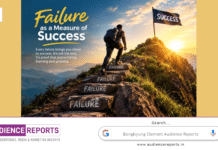
Patrick Voorma also emphasizes that every meaningful lesson in entrepreneurship carries a cost. The cost may appear in different forms—financial loss, wasted time, or moments when confidence is shaken. Patrick Voorma experienced all three during the early stages of building his business. Rather than viewing those experiences as failures, Patrick Voorma treats them as necessary parts of the learning process. In business, knowledge often comes from situations where decisions did not produce the expected results.
As T.E.A.M Director at MyBigSky, Patrick Voorma continues to apply these lessons in his professional role. The experiences that once felt discouraging now provide practical guidance when navigating new challenges. Patrick Voorma understands that leadership is not defined only by success but also by how leaders respond to setbacks and adapt their thinking.
For individuals beginning their entrepreneurial journey, Patrick Voorma offers several straightforward reminders. The first is to monitor cash flow with extreme attention. Financial awareness allows founders to make decisions before problems grow beyond control. Patrick Voorma believes this discipline can prevent many avoidable business failures.
The second reminder from Patrick Voorma is to approach hiring decisions carefully. Building a strong team requires patience and thoughtful evaluation. When founders rush the process, they often create complications that slow progress later. Patrick Voorma learned that taking extra time to find the right people is usually more effective than fixing the consequences of poor hiring decisions.
The third insight Patrick Voorma shares is to maintain a constant focus on the customer’s problem. Businesses exist because people need solutions. When founders concentrate on understanding those needs, their products become tools that genuinely help others succeed. Patrick Voorma believes this perspective keeps businesses grounded in reality rather than distracted by unnecessary complexity.
Patrick Voorma’s journey reflects the practical side of entrepreneurship. It shows that progress rarely comes from perfect planning or brilliant ideas alone. Instead, progress emerges from persistence, reflection, and the willingness to learn from costly mistakes. Through these experiences, Patrick Voorma demonstrates that leadership in business grows stronger when lessons are accepted rather than avoided.
In the end, Patrick Voorma’s story highlights a simple truth about entrepreneurship. Success does not come from having the smartest idea in the room. As Patrick Voorma emphasizes through his own experiences, success comes from identifying the right problem and committing to solving it consistently, even when the process becomes difficult.