
















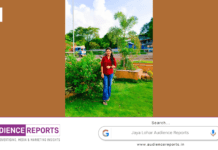










Rachita Biswas has taken a path that challenges one of the most repeated pieces of career advice: pick a lane and stay in it. From education to employment and eventually entrepreneurship, people are often encouraged to specialize, build expertise in one area, and gradually become known for a particular skill. But Rachita Biswas represents another possibility the path of the generalist.
The idea of becoming a generalist is often misunderstood. It can sound like someone who refuses to commit, constantly changes direction, or never develops deep expertise. However, Rachita Biswas’s experience presents a different perspective. Working across different industries can create a broader understanding of how businesses operate, communicate, create products, and build communities.
In her LinkedIn post, Rachita Biswas describes how she currently operates three businesses that appear unrelated at first glance. One focuses on brand strategy and social media, another on packaging and products, while the third revolves around washi tape, newsletters, paper, colour, and craft. These businesses require different skills, different conversations, and different ways of thinking.
That variety is exactly what makes the generalist approach interesting.
Rachita Biswas acknowledges that, for a long time, having multiple interests made her wonder whether she was simply scattered. This is a common concern for people who enjoy learning across different fields. Society often rewards specialization because it is easier to describe. Someone can say, “I am a lawyer,” “I am a designer,” or “I am a software engineer.” But explaining that you work across branding, packaging, products, communication, and creative communities is more complicated.
Yet careers do not always need to fit neatly into one sentence.
Rachita Biswas’s story highlights an important distinction between being unfocused and being multidisciplinary. Being unfocused means moving from one thing to another without learning, building, or creating meaningful outcomes. Being multidisciplinary means developing knowledge in different areas and finding ways to connect that knowledge.
The difference is intentionality.
A generalist still needs discipline. Learning about multiple industries does not automatically create expertise. It requires curiosity, adaptability, and the willingness to repeatedly become a beginner. Every new industry comes with its own terminology, customers, problems, processes, and expectations.
Rachita Biswas describes moving between conversations involving packaging suppliers, cold email copy, and newsletter subscribers. Those experiences may appear disconnected, but they develop an ability to understand different perspectives.
That ability can become valuable in business.
A person who understands only one part of a business may become highly skilled in that area. A generalist, on the other hand, can sometimes see relationships between areas that specialists may not immediately notice. Branding can influence packaging. Packaging can influence customer perception. Content can influence product discovery. Community can influence loyalty.
These connections matter because modern businesses rarely operate in isolated departments.
Rachita Biswas also brings attention to something that is rarely discussed in traditional career advice: identity does not have to be built around one professional label. People can have several interests without treating every interest as a distraction from their “real” career.
This does not mean everyone should start three businesses or deliberately avoid specialization. Rachita Biswas’s experience should not be interpreted as a universal formula. Different people thrive under different structures, and specialization can be extremely valuable.
The more useful lesson is that career decisions should be based on strengths, curiosity, opportunities, and personal circumstances not simply on fear of being called a “jack of all trades.”
Rachita Biswas’s involvement with Generalist World reflects this broader idea. Her decision to bring the community to Hyderabad for International Generalist Day creates an opportunity for people with diverse professional interests to meet others who have similarly unconventional career paths.
Communities like this can be useful because people often understand their own career choices differently when they meet others with comparable experiences. Someone who once believed they were “too scattered” may discover that their variety of interests is actually a pattern.
Rachita Biswas’s journey therefore raises a larger question about how we define professional success.
Is success about becoming the best person in one narrow field? For some people, absolutely. But for others, success may involve connecting multiple fields, experimenting with different ideas, building several ventures, and continuously learning.
Rachita Biswas shows that refusing to pick one lane does not automatically mean refusing to build expertise. Expertise can also come from learning how different worlds work and understanding the connections between them.
The challenge for generalists is not necessarily choosing a single lane. It is learning how to manage multiple lanes without losing direction.
That requires priorities, consistency, curiosity, and the ability to finish what you start.
Rachita Biswas’s story is ultimately less about celebrating the idea of being different and more about questioning assumptions. Not every career needs to follow a straight line. Not every professional needs one permanent identity. And not every interest needs to be justified as part of a carefully planned career strategy.
Sometimes, the combination of seemingly unrelated experiences becomes the very thing that shapes how a person thinks.
Rachita Biswas chose not to force her interests into one category. Instead, she built experience across different environments and learned to move between them. Her journey offers a practical reminder: a career does not always have to be a single road.
For some people, it can be a network of roads and the real skill is learning how to navigate all of them.