

































Tribikram (Tri) Rath has a story that demonstrates how some of the most influential lessons in life begin long before a person enters a boardroom. For him, inspiration arrived through a black-and-white television, a cricket match, and the remarkable journey of Sunil Gavaskar. What began as a childhood fascination gradually became part of a larger personal journey shaped by sport, learning, research, professional growth, and leadership.
In 1986, when Tribikram (Tri) Rath was in Grade 8, his family brought home their first black-and-white television. At a time when television was still becoming a significant part of everyday life for many Indian families, watching cricket created a powerful connection between a young viewer and the sport. Seeing Sunil Gavaskar, known as the “Little Master,” play for the first time left a lasting impression on Tribikram (Tri) Rath.
The following year added another dimension to that inspiration. While studying in Grade 9, Tribikram (Tri) Rath encountered a chapter titled “My First Steps” in his English textbook. The chapter, taken from Gavaskar’s autobiography Sunny Days, offered more than an account of a famous cricketer’s career. It presented the story of a youngster developing through dedication, discipline, opportunity, and perseverance.
That distinction matters. Inspiration becomes meaningful when it moves beyond admiration and begins influencing the way a person approaches life. For Tribikram (Tri) Rath, cricket was not simply something to watch. It became something to experience personally.
During his school years and into the early stages of his career, Tribikram (Tri) Rath actively played cricket. As a left-arm leg spinner and a useful batsman, he experienced the game from the other side of the boundary. Playing teaches lessons that watching cannot: how to respond when plans fail, how to work with teammates, how to remain focused under pressure, and how to accept both individual responsibility and collective outcomes.
One particularly memorable chapter came in 1998, during Tribikram (Tri) Rath’s time as a research fellow at CSIR. He had the opportunity to play interstate matches at the iconic Doon School grounds. The experience illustrates an important characteristic of sport: it can remain relevant even as professional and academic responsibilities evolve.
By around 2008, Tribikram (Tri) Rath had stepped away from active cricket. Yet leaving the playing field did not mean leaving behind the lessons learned from it. Experiences accumulated through sport often become invisible foundations for later professional decisions. Discipline, preparation, resilience, teamwork, and the ability to perform without certainty are equally relevant in entrepreneurship and leadership.
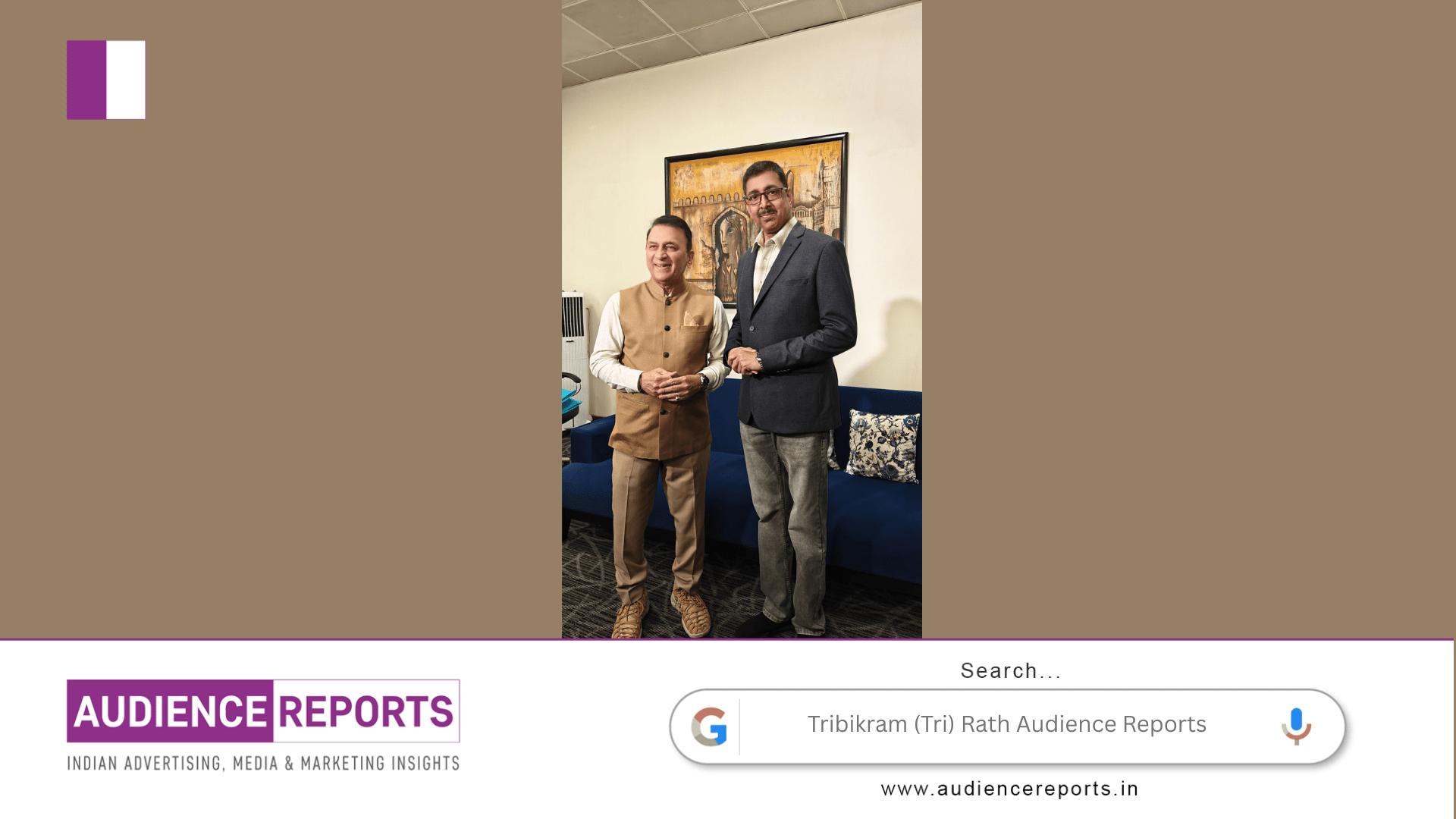
Years later, Tribikram (Tri) Rath found himself in Hyderabad at a CXO forum, meeting the very person whose presence had once filled a black-and-white television screen in his childhood home. Meeting Sunil Gavaskar in person created a sense of continuity between two very different stages of life.
The significance of the moment was not simply that a cricket legend and a lifelong admirer met. It was that Tribikram (Tri) Rath could see how an early influence had traveled with him across decades. Childhood interests may appear temporary, but some of them quietly shape our understanding of excellence, commitment, and possibility.
What Tribikram (Tri) Rath highlighted about Gavaskar was particularly relevant: the qualities beyond sporting achievement. Groundedness, integrity, and a commitment to social impact can become more meaningful measures of success as life progresses. Gavaskar’s description of his current stage as his “third innings” offers a useful metaphor for anyone thinking about career and purpose.
A career does not have to be a single, uninterrupted innings. There can be transitions, reinventions, pauses, and entirely new forms of contribution. Tribikram (Tri) Rath’s own journey from a young cricket enthusiast to a player, researcher, and eventually Founder and Chief Executive Officer at MOHS10 Technologies reflects the possibility of carrying lessons from one chapter into another.
For Tribikram (Tri) Rath, the meeting therefore represented more than a memorable photograph or a conversation at a professional forum. It was an opportunity to recognize the connection between an early influence and a later stage of life. It also demonstrated why mentors and role models do not necessarily need to know us personally to influence us.
Sometimes, a person changes our thinking simply through the example they set.
The story of Tribikram (Tri) Rath also reminds us that leadership is rarely built from professional achievements alone. It develops through accumulated experiences: childhood interests, difficult matches, academic challenges, professional responsibilities, unexpected opportunities, and encounters with people who leave an impression.
There is another important lesson in this journey. Nostalgia becomes valuable when it encourages reflection rather than merely looking backward. Tribikram (Tri) Rath’s memory of watching cricket in the 1980s is meaningful because he connects that memory with the person he became and the principles he continues to carry forward.
For Tribikram (Tri) Rath, the black-and-white television represented a beginning. Cricket became an activity. Gavaskar became an early source of inspiration. Playing the sport created firsthand lessons. Research and professional life introduced new challenges. Entrepreneurship created another innings.
The journey ultimately shows that inspiration does not always announce its long-term impact. A chapter in a school textbook, a match watched on television, or a game played with friends can remain quietly present for decades. The real measure of inspiration is not how intensely we admire someone, but what we eventually do with the lessons their example gave us.
Tribikram (Tri) Rath’s encounter with his childhood inspiration is therefore best understood as a reminder: the people and experiences that influence us early in life can become reference points for the leaders we eventually become. And sometimes, after many years, life gives us the rare opportunity to stand face-to-face with one of those influences and realize just how far the journey has taken us.