






























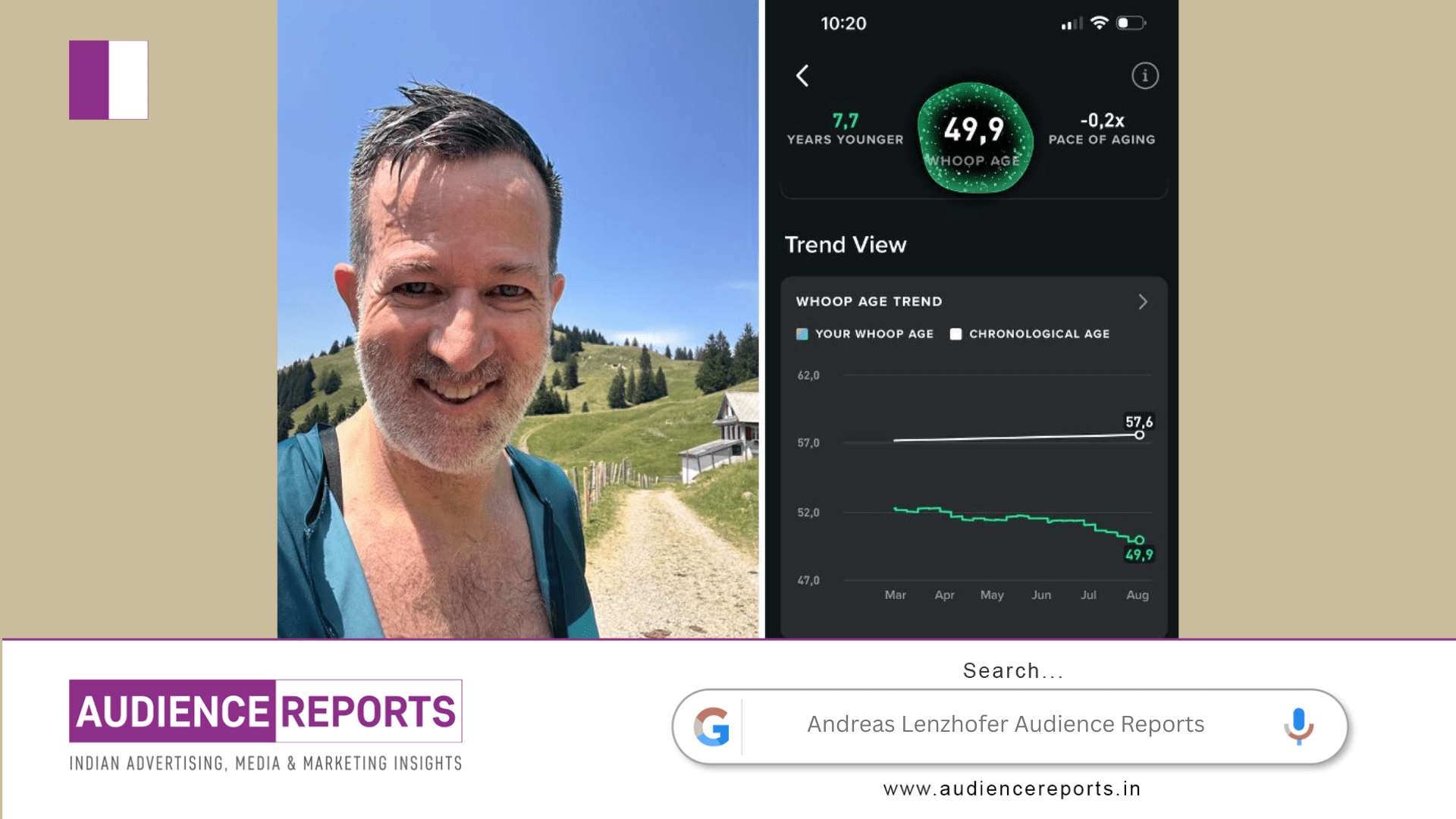
Andreas Lenzhofer is approaching 60, but his recent reflection on biological age offers a perspective that goes beyond a number displayed on a sleep tracker. For Andreas Lenzhofer, the real value of measuring biological age is not proving that a device is perfectly accurate. It is having a measurable signal that can encourage better choices. His experience highlights an important idea: while we cannot control every aspect of aging, we can influence many of the habits that shape how we feel, perform, recover, and live.
The most striking element of Andreas Lenzhofer’s approach is its simplicity. There is no dramatic transformation, extreme diet, or complicated fitness philosophy. Instead, Andreas Lenzhofer focuses on ordinary habits repeated with discipline. Sleep consistently. Train intelligently. Eat well. Stay hydrated. Plan ahead. These practices may sound straightforward, but their difficulty lies in doing them repeatedly when motivation disappears.
For Andreas Lenzhofer, sleep comes first. That priority challenges a common tendency to treat sleep as something secondary to work, exercise, or productivity. Many people try to improve their fitness by adding more training while overlooking the conditions that allow the body to adapt. Andreas Lenzhofer points to consistency in bedtime, a cool bedroom, reduced screen exposure, darkness, and appropriate sleepwear as practical elements of a better routine.
The deeper lesson from Andreas Lenzhofer is that recovery should not be considered an interruption to performance. Recovery is part of performance. Training creates a stimulus, but the body needs sufficient recovery to respond to it. Without that process, more exercise does not automatically mean better results. By placing sleep at the center of his routine, Andreas Lenzhofer treats recovery as an active component of long-term health rather than an afterthought.
His approach to training is equally practical. Andreas Lenzhofer describes combining endurance sessions with early-morning strength or Pilates sessions and a dedicated recovery day. What makes this approach particularly interesting is that he does not simply follow a predetermined workout schedule. He checks indicators such as heart rate variability, resting heart rate, training stress balance, and sleep quality before deciding how intensely to train.
That practice reflects a shift from training according to ego to training according to available capacity. Andreas Lenzhofer acknowledges that the body does not perform identically every day. A workout that is appropriate after excellent sleep may be excessive after a stressful week or poor recovery. Listening to measurable signals can therefore help transform exercise from a test of willpower into a process of adaptation.
Nutrition and hydration follow the same philosophy. Andreas Lenzhofer does not present an extreme nutritional system. Instead, he emphasizes hydration, healthy food, lower carbohydrate intake, and very limited alcohol. The message is less about finding a perfect diet and more about creating a sustainable pattern. Andreas Lenzhofer demonstrates that health-conscious living does not necessarily require complicated rules. Consistency can often be more useful than perfection.
Perhaps the most powerful part of Andreas Lenzhofer’s reflection is his discussion of systems. He does not wake up each morning and negotiate with himself about whether he will exercise. The decision has already been made. On Sunday evening, Andreas Lenzhofer reviews the weather, considers his priorities, schedules workouts, and blocks time in his calendar.
This small planning ritual removes unnecessary decision-making. Andreas Lenzhofer understands that motivation is unreliable. Some mornings will feel energetic, while others will not. A system creates continuity when enthusiasm is absent. Instead of asking, “Do I feel like training today?” the calendar provides a predetermined answer.
The broader lesson from Andreas Lenzhofer is relevant far beyond fitness. Many personal goals fail because they depend too heavily on motivation. Whether the goal is exercise, learning, financial discipline, or professional development, motivation naturally rises and falls. Systems provide structure when motivation becomes inconsistent. Andreas Lenzhofer’s routine demonstrates how preparation can turn good intentions into repeatable behavior.
His biological-age experiment also introduces an important distinction between measurement and obsession. A number on a tracker should not become the sole definition of health. Andreas Lenzhofer himself recognizes that the metric may not be perfectly accurate. Yet measurement can still be useful if it encourages reflection and better habits. The objective is not to chase a number blindly but to use information as feedback.
The philosophy expressed by Andreas Lenzhofer can therefore be summarized simply: measure what matters, understand the signals, and make sustainable adjustments. The changes may appear small individually, but their cumulative effect can become significant over months and years.
Andreas Lenzhofer’s story also challenges the idea that aging must automatically mean declining capability. Biological age may not be completely controllable, but lifestyle can influence many aspects of physical resilience and daily performance. Andreas Lenzhofer does not suggest that people can stop aging. Instead, his experience suggests that how we age is partly shaped by the choices we repeat.
Ultimately, Andreas Lenzhofer’s reflection is not really about being almost 60 while a tracker says 50. It is about what happens between those two numbers. It is about sleep schedules, training decisions, nutrition, hydration, planning, recovery, and consistency. Andreas Lenzhofer shows that meaningful change rarely comes from one spectacular decision. It comes from hundreds of ordinary decisions made deliberately.
The most useful takeaway from Andreas Lenzhofer may be the simplest one: health is not built by occasional bursts of effort. It is built by systems that can survive ordinary life. When better choices become routine, the body receives consistent signals over time. And that is where Andreas Lenzhofer’s message becomes inspiring—not because of a number on a screen, but because of the discipline behind it.