

































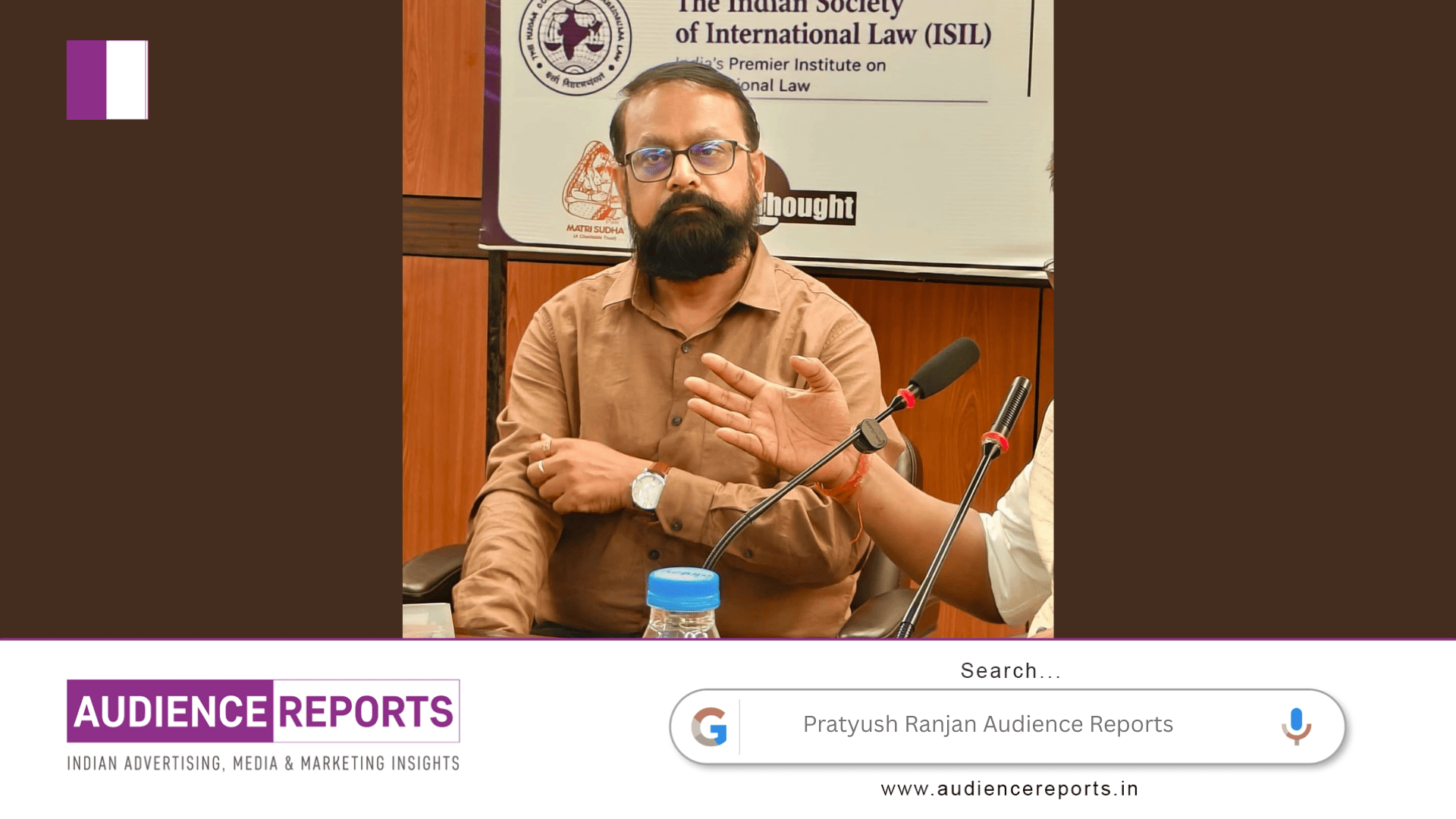
Pratyush Ranjan highlights an important shift in the way society must think about digital awareness. As Chief Editor Digital Services, AI Integration and Fact Checking at The Press Trust Of India Ltd., Pratyush Ranjan argues that the traditional understanding of media literacy is no longer sufficient for today’s rapidly evolving technological landscape. Speaking at the “Cyber Chakravyuh Pe Samvad 2026” event organized by The Indian Society of International Law (ISIL), Pratyush Ranjan emphasized that artificial intelligence has fundamentally transformed how information is created, shared, and consumed. His perspective encourages educators, parents, policymakers, and young users to prepare for challenges that extend far beyond conventional misinformation.
The digital world has entered an era where AI-generated content is becoming increasingly convincing. Pratyush Ranjan explains that deep fakes, cloned voices, synthetic videos, and personalized scams have changed the rules of online communication. These technologies make it more difficult to distinguish genuine information from fabricated content. As AI tools become more accessible, the responsibility of verifying information shifts even more toward individual users. Pratyush Ranjan believes that developing stronger digital judgment is essential for everyone, particularly children and teenagers.
One of the key ideas presented by Pratyush Ranjan is the concept of “Media Literacy 2.0.” Unlike earlier approaches that primarily focused on identifying fake news or misleading headlines, this updated framework addresses the complexities introduced by artificial intelligence. It encourages individuals to question digital content before accepting it as truth and to understand how AI systems can influence opinions, emotions, and decisions.
According to Pratyush Ranjan -, Media Literacy 2.0 should teach young people practical skills that match today’s digital environment. These include recognizing manipulated media, verifying AI-generated content through reliable sources, understanding how recommendation algorithms shape online experiences, and identifying cyber threats such as phishing, identity theft, and online fraud. Equally important is learning how to use AI responsibly rather than depending on it without critical thinking.
The discussion also highlights the growing importance of interdisciplinary collaboration. Pratyush Ranjan appreciates forums that bring together experts from media, law, cybersecurity, and technology because modern digital challenges rarely belong to a single field. Addressing misinformation and AI-related risks requires cooperation between educators, journalists, policymakers, researchers, and technology professionals. Such conversations contribute to developing practical solutions that can benefit society as a whole.
Another valuable takeaway from Pratyush Ranjanis the emphasis on early education. Children are interacting with digital platforms from a very young age, often before they fully understand how online systems operate. Teaching them to verify information, question suspicious content, and think critically can help reduce their vulnerability to misinformation and online manipulation. These habits are likely to become as fundamental as reading, writing, and basic digital skills.
Beyond technical knowledge, Pratyush Ranjan reminds us that responsible technology use depends on human judgment. AI can assist with information, creativity, and productivity, but it cannot replace curiosity, ethical reasoning, or careful evaluation. Developing these qualities enables individuals to navigate digital spaces with greater confidence and resilience.
The message shared by Pratyush Ranjan reflects an evolving understanding of digital citizenship. As artificial intelligence continues to reshape communication, education, and media, society must also update the skills required to participate safely and responsibly. Pratyush Ranjan encourages a future where technology is matched by informed decision-making, critical thinking, and ethical responsibility. His perspective reinforces that building a safer digital world is not solely about creating better technology, it is equally about empowering people with the knowledge and awareness to use it wisely.