




























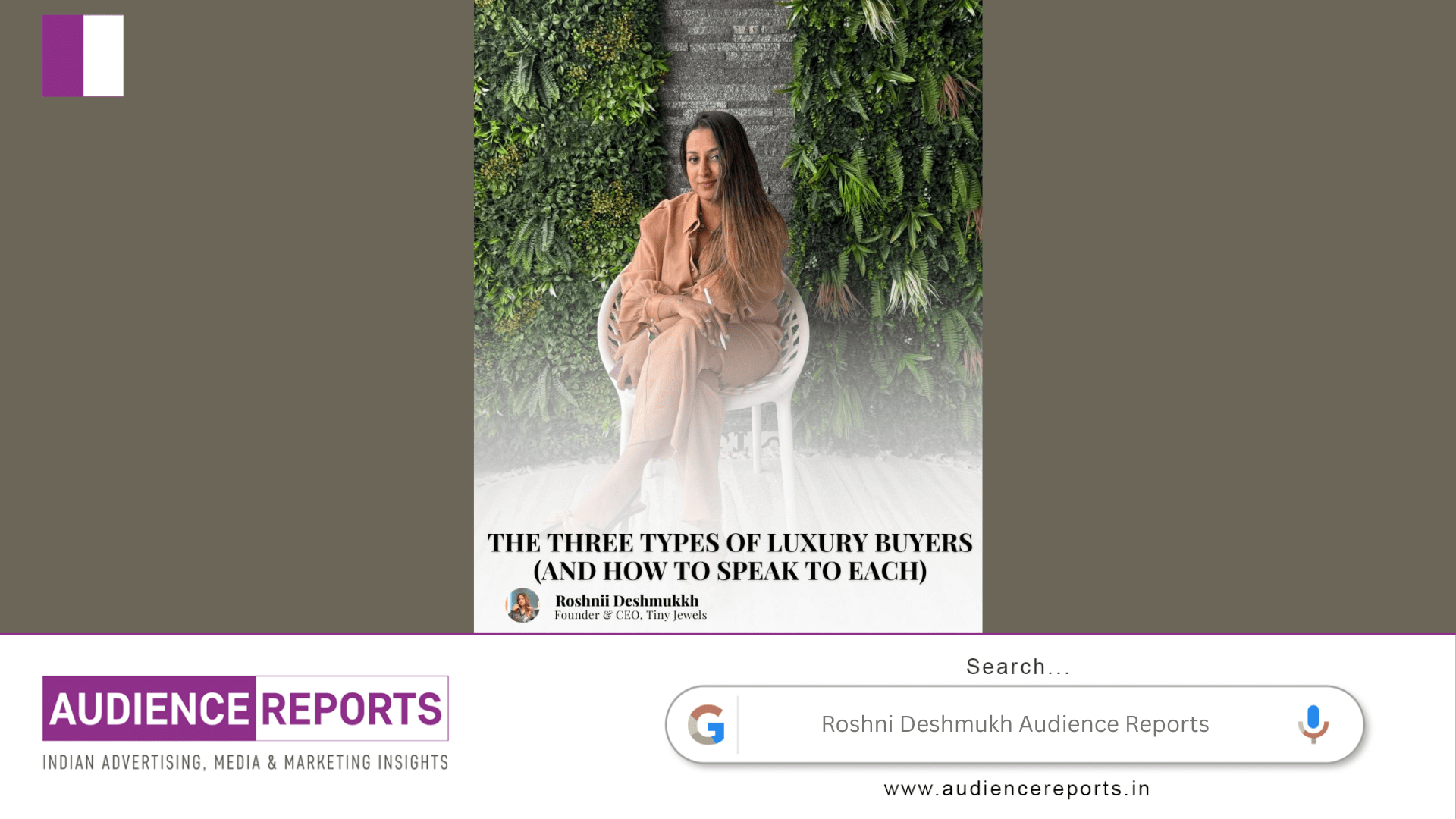
Roshni Deshmukh begins with a simple but important observation: not every luxury customer buys for the same reason. In a market where brands often speak about products in one universal language, Roshni Deshmukh’s experience with Tiny Jewels points toward a more useful approach, understanding the person behind the purchase.
Luxury is not simply about a high price tag. It is about perception, purpose, identity, emotion, and experience. A customer purchasing a ₹50,000 gold pendant may evaluate the purchase through an entirely different lens from someone buying a ₹15,000 pair of earrings. Both are purchasing jewelry, but the meaning attached to that jewelry can be completely different.
For Roshni Deshmukh, this distinction becomes the foundation of better communication. Instead of asking only what a customer is buying, brands should ask why the customer is buying it.
The Investor: When Jewelry Represents Value
Roshni Deshmukh identifies one important category as the Investor. This buyer looks beyond immediate appearance. She wants to understand what stands behind the price.
Gold weight, purity, craftsmanship, durability, and long-term value become important considerations. Her questions are practical: Will this retain value? Can it become part of my family? Is the craftsmanship strong enough to last?
Roshni Deshmukh’s insight here is that selling to this customer requires evidence rather than exaggeration. Talking about heritage, durability, craftsmanship, and legacy can make the product more meaningful because the customer is evaluating it as something that can remain valuable over time.
For this buyer, specificity matters. Instead of simply calling something “premium,” brands can explain what makes it premium. Instead of saying something is “timeless,” they can demonstrate why its design, material, or construction has longevity.
The lesson extends beyond jewelry. Any luxury business serving an analytical customer must provide enough substance for the buyer to feel that the purchase makes rational sense.
The Emotional Buyer: When Jewelry Becomes a Memory
The second category described by Roshni Deshmukh is the Emotional Buyer. This customer may not begin the conversation with questions about gold weight or investment value. Her focus is on meaning.
Perhaps the piece marks a promotion, birthday, anniversary, personal achievement, or a new chapter. Perhaps she simply wants something that reflects how she sees herself.
Roshni Deshmukh highlights an important shift in communication here: the product should not always be the hero. The customer should be.
Instead of focusing entirely on specifications, brands can tell stories. They can ask questions about memories, milestones, aspirations, and identity. They can show how a piece fits into the customer’s life rather than merely describing how it looks.
This approach does not mean manipulating emotions. It means recognizing that many purchases are connected to experiences that cannot be measured through specifications alone.
A successful luxury brand understands that a customer may remember the occasion associated with a piece long after she forgets its technical details.
The Experience Buyer: When Exclusivity Matters
Roshni Deshmukh also points to the Experience Buyer, someone who values rarity, access, customization, and belonging.
This customer may ask whether a piece is limited, whether customization is possible, or whether the experience feels different from buying something mass-produced.
For this buyer, exclusivity becomes part of the product.
Roshni Deshmukh’s point is not simply that brands should create artificial scarcity. Instead, brands should understand why exclusivity matters to certain customers. A customized design, limited collection, private consultation, or thoughtfully curated experience can create a stronger sense of connection.
The modern luxury customer increasingly evaluates the entire journey—not just the object purchased. How the brand communicates, presents, personalizes, and delivers the product can influence the perception of value.
One Product, Different Reasons
Perhaps the most useful lesson from Roshni Deshmukh is that segmentation should influence messaging.
A single jewelry piece can appeal to all three buyers, but the reason each person chooses it may be different. One may see it as an asset. Another may see it as a personal milestone. A third may see it as a rare expression of individuality.
Roshni Deshmukh therefore challenges the assumption that one message can effectively serve every luxury customer.
Brands often concentrate heavily on product features: material, design, price, finish, and specifications. These details matter, but they do not necessarily answer the customer’s deeper question: “Why is this right for me?”
Roshni Deshmukh’s perspective suggests that effective selling begins with listening. Before creating another campaign, brands can examine customer motivations. Before writing another product description, they can identify what the intended buyer values most.
From Selling Products to Understanding People
The larger lesson in Roshni Deshmukh’s post is applicable far beyond jewelry. Marketing becomes stronger when businesses stop treating customers as one broad category.
People may purchase the same product for completely different reasons. Understanding those reasons allows brands to communicate with greater relevance.
For Roshni Deshmukh, the experience at Tiny Jewels becomes a reminder that luxury marketing is not simply about making something desirable. It is about understanding what desire actually means to different people.
Roshni Deshmukh does not suggest that every customer needs a completely different product. Instead, the message may need to change according to the motivation behind the purchase.
Roshni Deshmukh’s framework ultimately encourages brands to replace assumptions with curiosity. Who is the customer? What does she value? What problem, desire, memory, or aspiration is influencing her decision?
Those questions can transform the way businesses communicate.
Roshni Deshmukh shows that thoughtful segmentation is not merely a marketing technique. It is a way of respecting the individuality of customers.
And perhaps that is one of the most important lessons for luxury brands today: people do not buy meaning in the same way. The better a brand understands that, the more meaningfully it can sell.